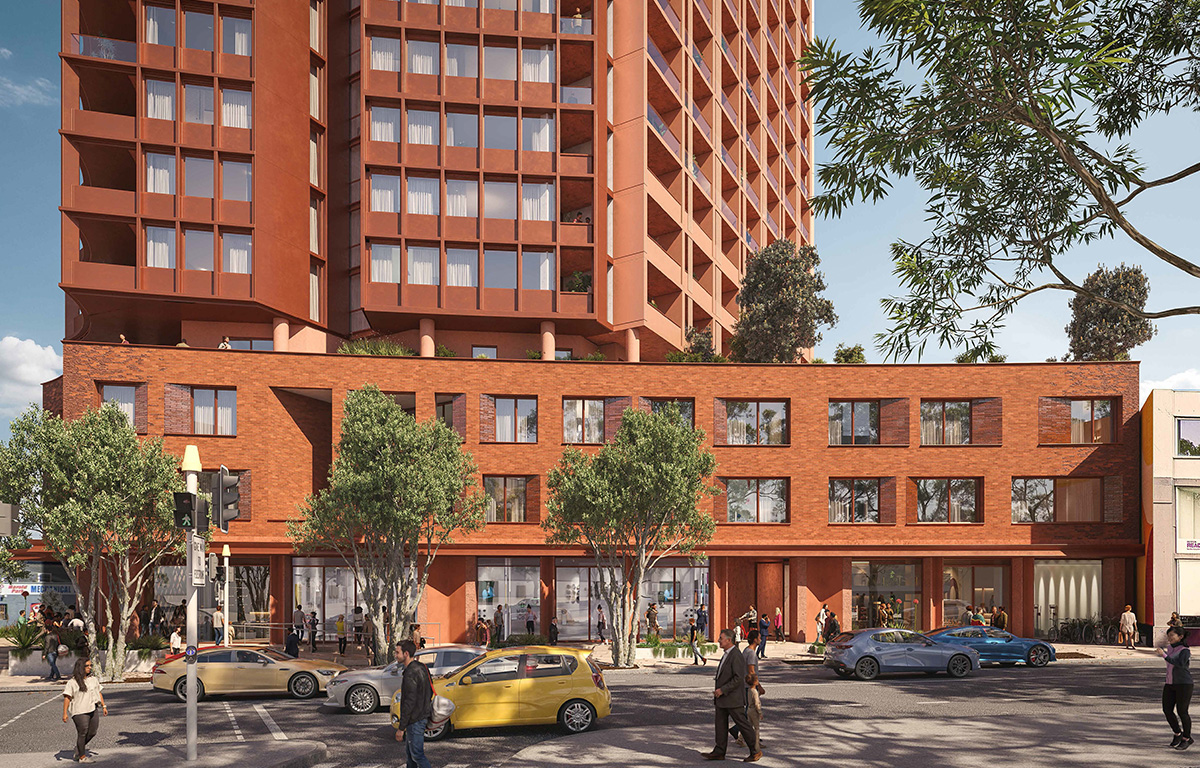


The NSW Housing Delivery Authority (HDA) was introduced to fast-track significant housing projects through the planning system, with the goal of building quality homes quickly. What’s become clear since the HDA’s introduction is that gaining approval means demonstrating both speed and quality, and that requires a project team that arrives with evidence, not just intentions. Arcadia Design Director Michael Barnett has spent the past year embedded in project teams navigating this pathway, and his experience is consistent: the submissions that move smoothly through assessment are rarely the ones with the most striking renders. They’re the ones built on rigour and design thinking from day one.
The Housing Delivery Authority assesses projects on merit and public benefit, which means every element of a submission needs to earn its place. Landscape input is increasingly part of the evidence base itself, not a finishing touch applied at the end. That evidence spans biodiversity outcomes grounded in deep planting and ecological knowledge, water-sensitive urban design and public amenity, but for Arcadia it starts earlier still, with an authentic Connecting with Country process, led by our First Nations Design Consultancy, that shapes the design response from the outset rather than being retrofitted for the sake of a submission.
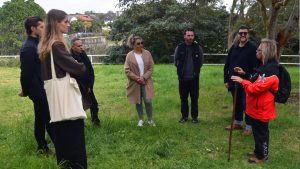
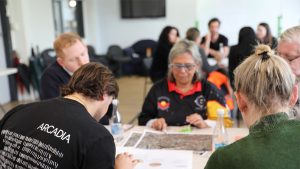
Arcadia’s First Nations Design Consultancy embeds Indigenous research into every project through desktop research, Walkshops and co-design, working directly with Knowledge Holders, Traditional Custodians and cultural leaders rather than treating cultural input as a late-stage compliance step. For a Housing Delivery Authority panel weighing density and scale against public benefit, that distinction matters: a landscape architect who understands both the mechanics of the HDA process and the substance of a genuine Connecting with Country process brings evidence that holds up under scrutiny. It’s that blend of design excellence, planting and ecological knowledge, and Connecting with Country practice that’s increasingly seeing Arcadia sought out as a design partner from the outset, rather than appointed further down the track. Caring for Country in this way carries its own environmental dividend too, with stronger, more enduring biodiversity and water-sensitive design outcomes a natural consequence of designing with a deeper respect for place, rather than layering it on afterward.
“We’ve worked hard to provide value to the process that goes beyond a planting plan and a nice render. We know that an assessment panel is moved by evidence: an effective Connecting with Country process, and digital models that catch problems before they surface. That combination of cultural and technical rigour, combined with design thinking, is what gets projects through.”
Michael Barnett, Director, Arcadia
Grounded in Country: Pyrmont Bridge Road
At the corner of Pyrmont Bridge Road and Parramatta Road in Annandale, on Gadigal and Wangal Country, Arcadia is the landscape architect and the Connecting with Country consultant for a proposed 22-storey build-to-rent tower. Lodged as State Significant Development under the Housing Delivery Authority pathway (SSD-84024470) and currently on public exhibition, the proposal would deliver 281 build-to-rent apartments above a 656sqm retail podium on a 2,570sqm site at the western edge of the Camperdown precinct, within Sydney’s Tech Central innovation corridor. It’s precisely the kind of site the Housing Delivery Authority pathway was designed for: well-located, close to transport and major institutions, and capable of delivering rental housing supply at scale.
Arcadia’s First Nations Design Consultancy led a Connecting with Country process for the site, working with Knowledge Holders Aunty Pam and Ash of Konanggo Aboriginal Cultural Services to ground the landscape response in the site’s deeper story, from its historical connection to Johnstons Creek’s water and vegetation corridors, to the sense of belonging and community the public domain is designed to support. Arcadia’s planting and ecological knowledge then carries that story through into the detail of the design, translating it into a public domain that performs as strongly ecologically as it does culturally. It’s a goal for Arcadia that for every project, this process will shape the design response from the outset, rather than being retrofitted to support a submission already locked in.
“Pyrmont Bridge Road shows what’s possible when a meaningful Connecting with Country process is applied to a precinct such as Camperdown, shifting from health and education uses to housing. The Housing Delivery Authority is looking for significant public benefit and for us that means the cultural story of a site and its environmental performance both need to be built into the design response from day one.”
Michael Barnett, Director, Arcadia
Coordinating a precinct: Dank St District, Waterloo
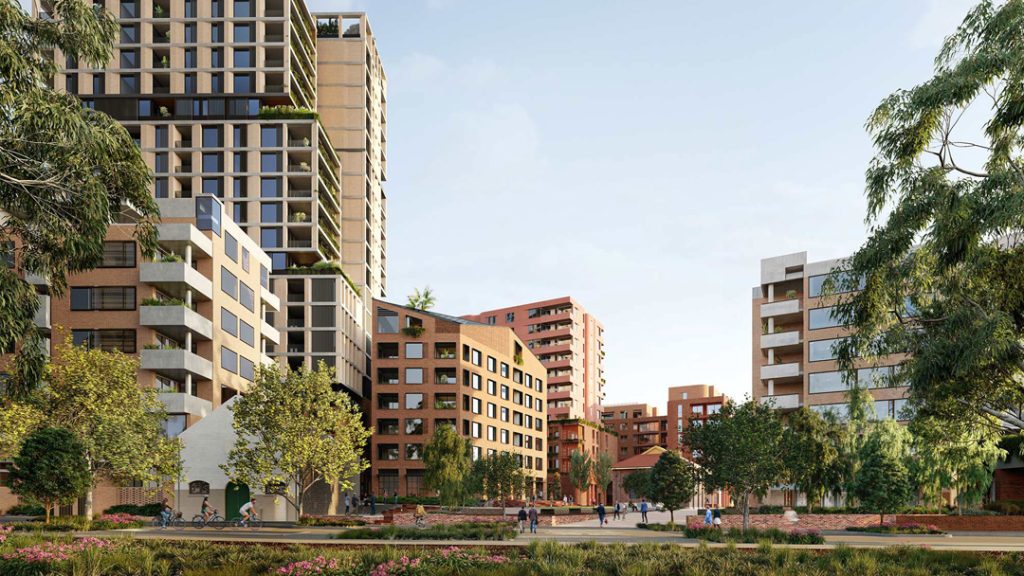
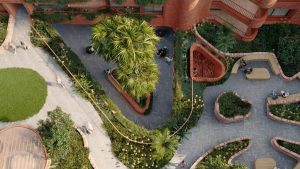
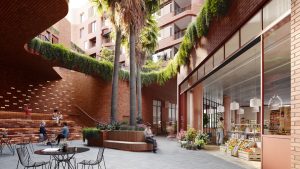
Not every project is a single site with a single architect. At Dank St District in Waterloo, on Gadigal Country, Arcadia is delivering the landscape master plan across a mixed-use precinct for client Dasco, working alongside four separate architecture practices: Bates Smart, MHNDU, Fieldwork and Richards & Spence. The brief called for a new social heart for the area, with plazas, water play, linear parks, retail laneways and a series of rooftop gardens spanning multiple residential buildings, each designed by a different practice but needing to read as one coherent public domain. That kind of coordination role, holding a consistent landscape and public domain strategy together across several design teams, is exactly the sort of complexity an assessment panel wants to see resolved before approval, and exactly the kind of role that comes from being sought out for design thinking as much as technical delivery, trusted to hold one creative vision together across a precinct rather than just deliver a single landscape.
Bringing the right team in early
The common thread across these projects isn’t the scale or the site, its timing, and its fluency. Arcadia’s advice is straightforward: landscape input works best when it starts alongside architecture and planning, not after the concept is locked in, and that’s just as true of a genuine Connecting with Country process as it is of a biodiversity assessment. On a Housing Delivery Authority timeline, there often isn’t time to retrofit either kind of evidence into a submission that was designed without it.
For developers and architects assembling a team for a project heading through the Housing Delivery Authority pathway, that’s the case for choosing a landscape architect sought after for design excellence as much as process, one who understands both the regulatory mechanics and the substance of a Connecting with Country process. A team that can speak fluently to a panel’s regulatory expectations and to a Connecting with Country process, at the same time, is better placed to move through assessment without delay, and to deliver a public benefit case that holds up under scrutiny.
Get in touch with Arcadia to find out how our landscape, urban design and First Nations Design Consultancy teams can support your next submission.